

The previous brief established that orchestration is the layer that turns intelligence into behavior. It described the runtime that governs how agents reason, what they are allowed to do, and when. This brief goes one level deeper. It explains the component that determines whether any of that behavior can be trusted. Without it, orchestration is just fast. With it, orchestration becomes safe.
The Failure Mode Everyone Eventually Hits
Every organization deploying agents encounters the same moment. The model reasons well. It produces coherent explanations, plausible plans, structured outputs. It impresses the engineers who built it. Then its output touches real infrastructure and something goes wrong in a way nobody anticipated.
The instinct is to blame the model. Make it smarter. Add more context. Tune the prompts. This instinct is wrong and it is expensive. The model is not the problem. The absence of verification is.
A model can produce an answer. It cannot guarantee the answer is correct. It cannot guarantee the answer is grounded in the right sources. It cannot guarantee the answer is safe to act on. That guarantee must come from a separate process. A process that does not share the model’s context, its assumptions, or its reasoning path. A process that re-derives the answer independently and asks one question: is this safe to move?
Most organizations do not build that process. They find out they needed it after the incident that makes it obvious.
What Amazon Demonstrated
Amazon provided the clearest example of this failure mode last week. A single operator deployed a high-blast-radius configuration change with no automated validation and no governing layer to determine whether the change was safe. The result was a 99% drop in orders across North American marketplaces. 6.3 million lost orders in one day.
Their internal postmortem named the structural cause directly. Generative AI accelerates exposure of sharp edges and places where guardrails do not exist. Their SVP committed to investing in deterministic and agentic safeguards combined.
That phrase describes the architecture precisely. Deterministic safeguards define the rules. Agentic safeguards reason about the world. Verification is the layer that ensures both are satisfied before anything touches production. The missing component was not a smarter model or a better prompt. It was a separate process with one job: re-derive the answer independently and ask whether the change was safe to move before it moved.
Why the Model Cannot Verify Itself
The most common mistake teams make when they add verification is asking the model to check its own work. This is not verification. It is confirmation.
A model checking its own output shares the same context, the same assumptions, and the same reasoning path as the original. It cannot detect missing context because it cannot see what it did not see the first time. It cannot identify flawed assumptions because it cannot step outside the reasoning it already took. It cannot distinguish inference from evidence because the inference was its own.
Asking a model to verify itself is the equivalent of asking the operator who deployed the change to approve their own deployment. The conflict of interest is structural, not personal.
Verification requires independence. That independence must be architectural, not instructional. You cannot prompt your way to an independent verifier. You have to build one.
What the Verification Layer Actually Does
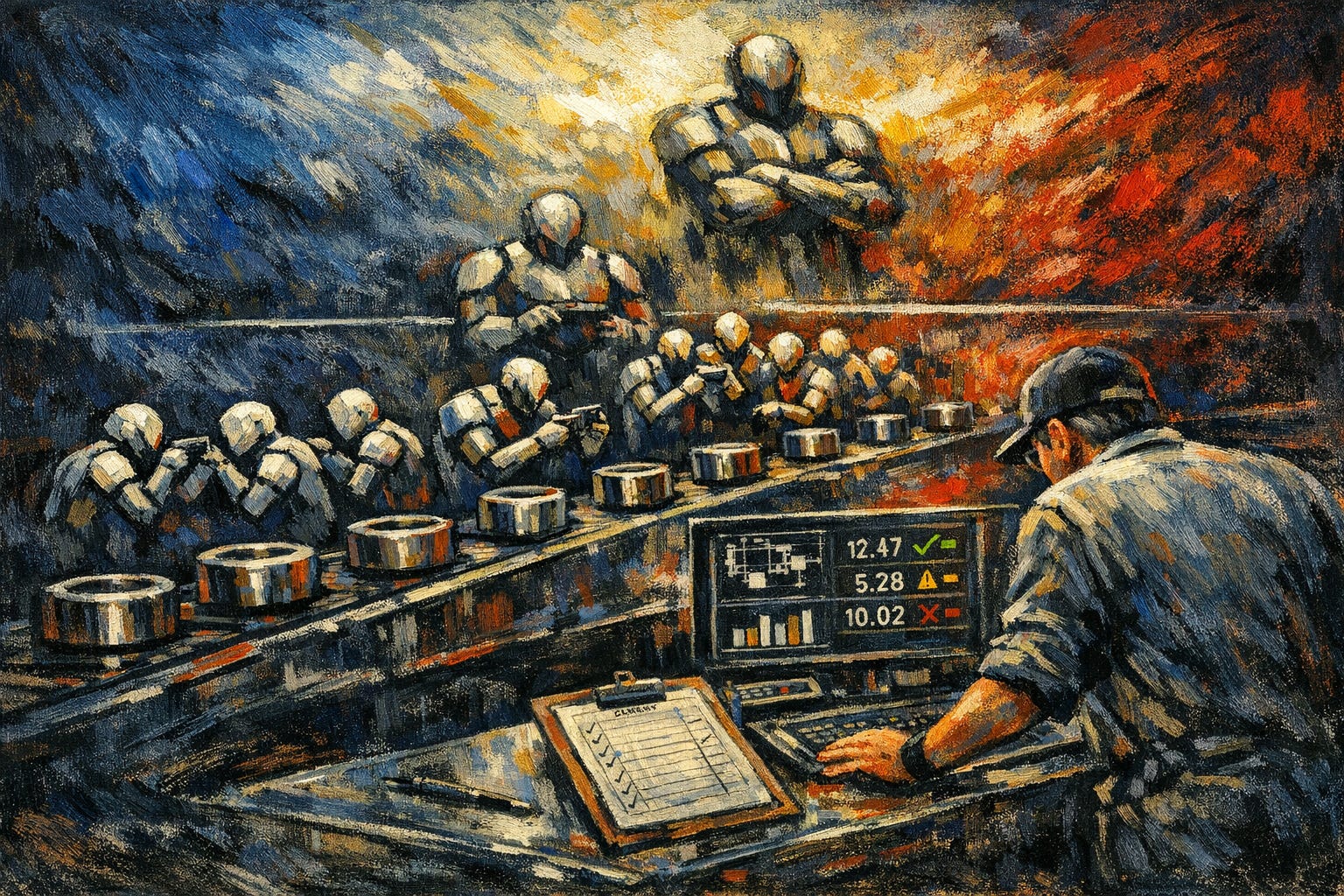
A real verification layer performs four specific operations that together produce a trustworthy verdict.
It re-queries the authoritative sources independently. Not the model’s intermediate steps. Not the context assembled by the reasoning runtime. The original sources. The logs, the metrics, the source code, the configuration. The verifier builds its own context from scratch. If the original investigation read the wrong log window, the verifier reads the right one. If the original investigation missed a dependency, the verifier finds it.
It reconstructs the investigation from scratch. The verifier does not read the original analysis and agree or disagree. It re-derives the answer independently and compares. This is the critical design decision most teams skip because it is expensive. It requires a full second investigation. Teams that skip it and build a “reviewer” instead of a verifier have not solved the problem. They have added a step that produces the same answer with more latency.
It scores every claim. Confirmed. Contradicted. Unverifiable. Each claim in the original analysis receives a verdict based on what the verifier found in the authoritative sources. Contradicted claims are surfaced explicitly. Unverifiable claims are flagged so the engineer knows where the gaps are. The aggregate of those scores produces the overall verdict.
It gates the action surface. Nothing reaches production, and nothing reaches an engineer as a trusted output, until the verification layer has rendered its verdict. The verdict is not hidden in metadata. It is the first thing the engineer sees. A verified output carries a banner that says the claims were independently checked. An unverified output carries a different banner that forces the confidence to low and lists the contradictions explicitly. The engineer makes their decision with full visibility into how much the system trusts its own output.
These four operations are not optional features. They are the minimum required to make an agentic system safe to act on in a production environment.
Why Verification Is the Gatekeeper of Autonomy
Autonomy is not a function of intelligence. It is a function of trust. And trust is not declared. It is earned through a record of verified outputs that turned out to be correct.
You cannot increase autonomy without increasing verification. You cannot skip verification and expect safety at scale. You cannot hand agents more responsibility until you have a layer that independently checks whether their conclusions deserve it.
This is why verification is the foundation of the autonomy ladder. Orchestration defines how agents behave. Verification determines whether that behavior is allowed to reach the world. An agent that has passed verification consistently at the analysis level has earned the right to be considered for action. An agent that has not has not earned anything, regardless of how capable it appears in a demo.
The organizations that will safely expand agent autonomy over the next two years are the ones that build the verification layer now, before the pressure to move fast makes it feel like an obstacle rather than a foundation.
A Working Verification System
The system built inside a real engineering organization over the last year implements this architecture in production. After the reasoning runtime completes its investigation, a separate process with no memory of the original analysis re-queries Datadog, reads source code, checks configuration, and reconstructs the investigation from scratch. Every claim is scored. The verdict is attached to the output before it reaches the engineer.
When the verification passes, the engineer sees a banner that tells them the output was independently checked and the confidence level is high. When it does not pass, the engineer sees the contradictions explicitly and the confidence is forced to low. The engineer always knows how much to trust what they are reading.
This is not a theoretical design. It is the system Amazon described when they committed to deterministic and agentic safeguards combined. The difference is it was already running before last week.
Most organizations will build this layer after the incident that forces them to. The purpose of this brief is to explain how to build it before.
The next brief examines the autonomy ladder. Verification determines whether an agent’s output can be trusted. The autonomy ladder determines how much an agent is allowed to do with that trust, and how it earns the right to do more.